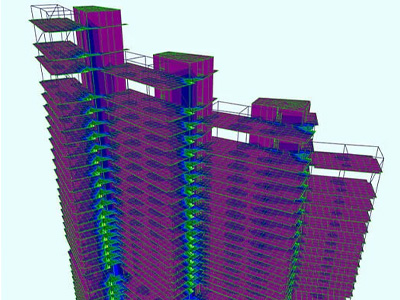
Structural Analysis for Everyday Workflows
Altair® PollEx™ accelerates the development of today’s smart, connected, and tightly packaged electronic products. PollEx enables teams to review and improve board layouts, and drive designs with simulation tools for signal integrity, power integrity, EMI vulnerability, and ESD protection, without relying on "rules of thumb." Used by global industry leaders to increases the efficiency of PCB fabrication, assembly, and end-of-line testing, PollEx improves performance, enables teamwork, and enhances collaboration to ensure timing, performance, reliability, and compliance targets are met.
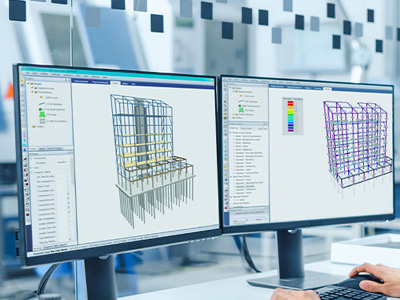
Code-Compliant Structural Analysis and Design
Altair® Feko® enables teams to optimize wireless connectivity, including 5G, ensure electromagnetic compatibility (EMC), and perform radar cross section (RCS) and scattering analysis. It is the leading tool for understanding and optimizing antenna placement and coupling. Installed antenna performance is heavily dependent on how and where antennas are integrated. Feko is extensively used for immunity and emissions analysis of cables, antennas, and other devices. It simulates wireless coverage and enables radio network planning for a building, campus, city, or region.
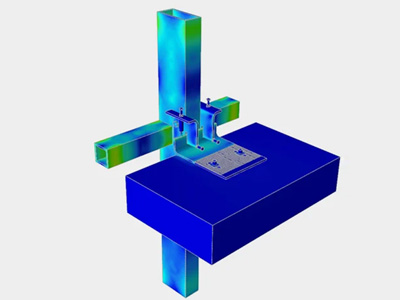
Fast, Mesh-Free, 3D Geometry Analysis
Altair® SimLab® accurately analyzes the performance of complex assemblies under real world conditions before physical prototyping. Highly automated workflows drastically reduce the time spent creating models and interpreting results. Confidently identify and correct potential design issues earlier in development with thermal analysis that doesn’t require advanced CFD knowledge. Automate structural stress, vibration, and drop test performance assessments. Optimize electric motors, taking into account the generated power, noise and thermal considerations of a design.
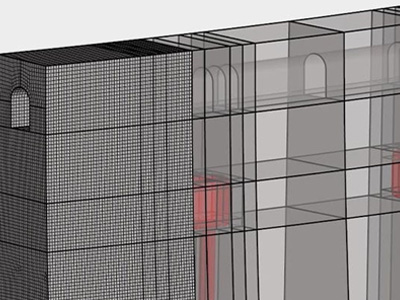
High-Performance Meshing, Structural Analyses and Optimization
Altair® HyperMesh®'s advanced meshing and post-processing capabilities help engineers design structures with complex geometries, challenging loading conditions, or other design parameters not typically encountered in conventional construction. Mesh generation tools for shell, tetra, and hexa meshing ensure the high-quality model discretization needed to meet civil engineers' challenges. Perform design changes quickly via mesh morphing and geometry dimensioning to reduce meshing time. Integrated with Altair® OptiStruct®, a generative design tool for innovative, lightweight, and structurally efficient designs, users can optimize topology and weight according to multiple constraints, including traditional processes and additive manufacturing.
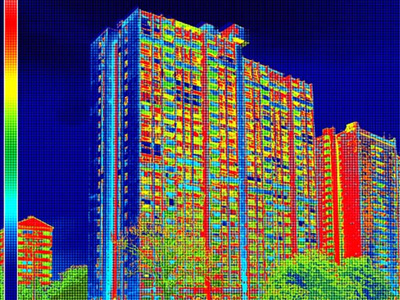
Energy-Efficient Buildings: CFD and Thermal Analysis
Altair's CFD and thermal analysis solutions enable architects, engineers, and construction professionals to build safer, more comfortable, more energy-efficient buildings that meet regulatory requirements and sustainability goals. Altair® AcuSolve® and Altair® SimLab® help engineers identify areas of high heat transfer or thermal bridging in building assemblies to improve insulation strategies and reduce energy loss. In addition, CFD solutions can evaluate solar radiation's impact on building surfaces and study shading strategies to minimize solar heat gain. In addition, users can optimize data center cooling systems by gaining insight into the airflow and temperature distribution patterns to reduce energy consumption and improve equipment reliability.

Section Calculator, Math, Scripting, and Visualization
Altair Compose® is a math, programming, data analysis, and visualization resource accessible in a user-friendly, multi-language scripting environment. With extensive math function libraries, Compose lets users write, test, perform calculations, and automate workflows. With Altair® S‑CALC™, users can instantly compute numerous section properties for complex, built-up, or multi-material shapes for use in further analysis – all within an easy-to-use graphical environment.